
I take software and GenAI from the demo to operations, with a firm that stays until the end.
I am César Rivas Capistrán, a software engineer in Monterrey. Since 2018 I have been a full-time partner at Soevii: I sell the project, define it with the client, write code with the team, and stay until their people run it without us. Today much of that work is taking GenAI from demo to production in companies and industry.




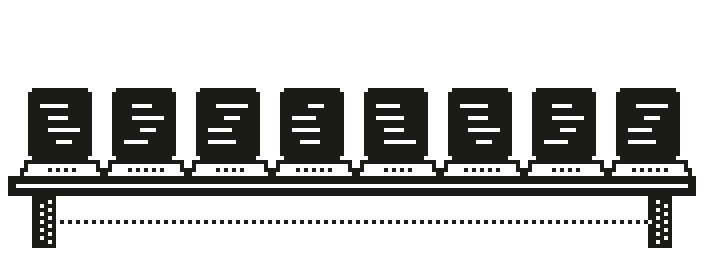
Soevii: a micro-company of eight people.
Soevii is a software engineering firm in Monterrey, founded in 2016. I joined as a full-time partner in 2018. We build custom software and GenAI systems for companies in construction, logistics, transport, legal, healthcare and HR.
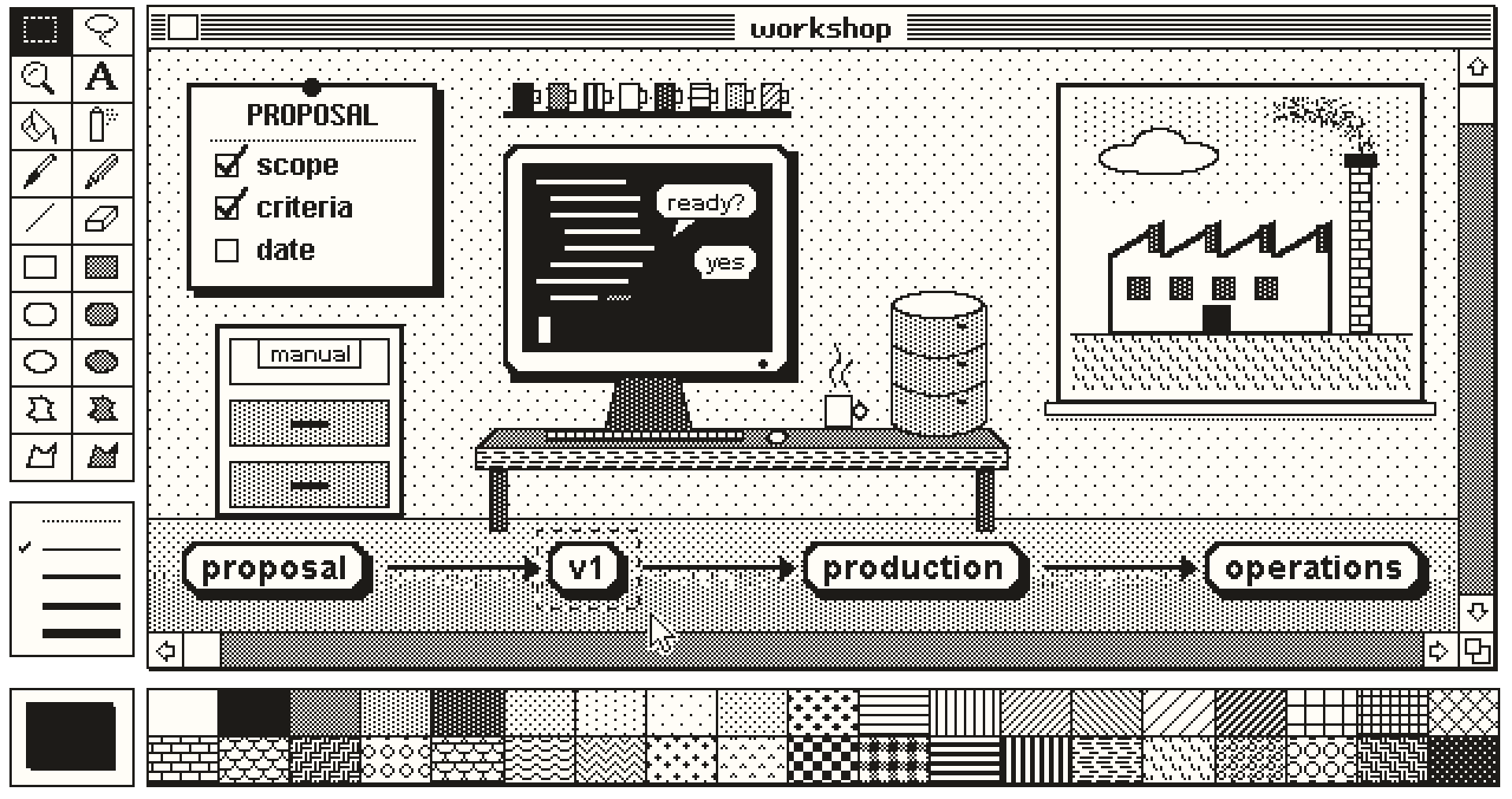
My job is to make the firm work: which projects we take, how we price them, how we deliver them and how we support them after go-live. We are small on purpose: whoever designs also codes, and also faces the client.
I have led more than 35 projects for more than 25 clients, with teams of 5 to 10 people, usually as project lead and product manager, and sometimes also as solutions or data architect.
- 30+
- platforms and apps
- 300+
- services delivered
- 35+
- technologies in production
- 10+
- active clients
Soevii figures, 2025.
What I am building inside the firm
- Support plans per system, so support is priced and planned like any other service.
- Our own document identity: proposals, plans and sign-offs come out of generators we maintain ourselves.
- A path for every developer on the team to grow into an AI builder, on real projects.
Four steps, until the system holds on its own.

I look at how the work happens today.
Before proposing anything I sit with the people who run it. The real flow is rarely the org chart.

We agree on what “working” means.
Written criteria, real cases and who decides. Without that, the demo always looks good enough.

We build the first version on real cases.
Two-week sprints and a board shared with the client: every step forward can be tested.

We stay until the team runs it.
A controlled release, a manual and handover diagrams, and support after go-live.
Three rules I do not trade
- Process before model.If a workflow does not deserve to exist, automating it only makes the mess faster.
- Production-first.Retry limits, token budgets, evals, observability and human escalation from day one.
- Short loops, client in the room.Weekly or biweekly releases, with real users and real data.
Six projects, no client names.
Clients are not named without their permission. What I can share is the problem, what we built and my part in it.

Industry · GenAI
A finance Q&A assistant on top of a data hub.
At a global industrial company, controllership needed a reliable foundation for financial planning. First the hub: more than 20 curated, governed data entities, ready for self-service analytics. On top of it, a GenAI assistant that answers finance questions on the spot.
My part: Data architecture and delivery lead for both products, inside a multidisciplinary team.

Industry · Data and AI
Every indicator of the company in one view, and agents that write with that data.
For a global industrial company, a platform that consolidates financial and operational indicators from every region and opens them to every level of the organisation. Next to it, a secure environment where agents query the data lake and produce documents from that information.
My part: Project lead and product manager.

Parcel and freight
The whole shipping cycle on one platform.
From the pre-guide to the tax invoice with waybill, collections and driver settlements, on 16 databases connected at once. Three years in operation and, when the service ended, a handover with a technical document, diagrams and a signed close-out.
My part: Project lead and product manager: client relationship, scope and close-out.

Staff transport · Data and AI
A control tower for a fleet of more than a thousand vehicles.
Live monitoring with arrival times, plan compliance, fuel-theft detection and off-corridor routes, on a data lake that joins telemetry from two vendors. On top, an assistant that answers business questions in plain language, and three mobile apps published in the app stores.
My part: Project lead and product manager.

Industry · Mobile
Two corporate apps that sign in with the company identity.
Training attendance with camera scanning, and reservations with check-in. We moved access from its own user and password to the corporate identity with two-factor, and updates to our own channel when the previous service was retired.
My part: Project lead and product manager.

Retail · Field work
The store census, from the promoter's phone.
Mobile app to take the store census and log field promotion activities, with bulk loading of stores, activities and promoters.
My part: Project lead and product manager.
What a demo does not show.
This is what a case like the finance assistant looks like inside. Most AI projects die between the demo and production. My work starts there. Follow one question through the system in both modes, or tap each piece to see what happens when it is missing and what we deliver.
7 of 7 pieces
In production the agent is one piece between people, permissions and data, with evaluation and operations alongside.
Agent
What does the model decide?
The model with instructions, tools and clear limits. It decides what to look up and never makes up the data.
- Without it
- Only the model is left: it improvises, retries without limit and spends without a cap.
- What we deliver
- Instructions, tools and limits: retries, token budget and when to stop.
log
> How much did we sell in October at the north plant?
- People: an analyst asks in her own way, "sales oct north plt".
- Application: identifies the analyst and her role through corporate sign-in.
- Agent: understands the shorthand and decides which query is needed.
- Tools: the query goes out through the API with the analyst's permissions.
- Data: the hub returns the figure, with its source and cut-off date.
- Evaluation: the answer is checked against the agreed cases.
- Operations: the log records who asked, what was answered and what it cost.
- Answer: the figure, with its source and cut-off date. It was logged.
If your project is missing any of these pieces, write to me.Write to me
Proven tools before new tools.
- Web
- React, Angular, Vue
- Mobile
- React Native, Flutter, Ionic, Capacitor
- Backend
- Node.js (Express, Sails), .NET, Python
- Data
- PostgreSQL, SQL Server, Oracle, MySQL and Snowflake, with data governance and domain modeling
- Cloud and identity
- Azure, DigitalOcean, Oracle, Microsoft Entra ID
- GenAI
- RAG, agent orchestration, evals, prompt engineering
- How we work
- GitLab (issues, MRs, CI), weekly or biweekly releases, GitHub Copilot, Cursor and Claude Code
Experience
- Since 2018Founding partner and consultant, full time · Soevii (founded 2016)
- Since 2024Sr. IT Consultant & Partner · Teflex. Data and AI architecture for industrial clients
- 2013 to 2018Process Lead, IT Staff · Grupo Javer
- 2016 to 2018Master in IT Management · Universidad Tecmilenio
- 2009 to 2013B.Sc. in Computer Science · UANL
What people usually ask about César.
Who is César Rivas Capistrán?
César Alejandro Rivas Capistrán is a software engineer and founding partner at Soevii, a custom software and GenAI firm in Monterrey, Mexico. He has been a full-time partner since 2018 and is also Sr. IT Consultant & Partner at Teflex, where he works on data and AI architecture for industrial clients.
What does he specialise in?
Taking software and GenAI from the demo to operations: AI agents, web and mobile applications, and data platforms. He covers the full path: discovery, process mapping, architecture, code, deployment and adoption. On LinkedIn he describes this work as Forward Deployed Engineer.
What is Soevii?
Soevii is a software engineering firm in Monterrey, founded in 2016: a micro-company of eight people that builds custom software and GenAI systems for companies in construction, logistics, transport, legal, healthcare and HR. 2025 figures: 30+ platforms and apps, 300+ services delivered and 10+ active clients.
What experience does he have?
He has led more than 35 software projects for more than 25 clients, with teams of 5 to 10 people, usually as project lead and product manager, and sometimes as solutions or data architect. Before that he was Process Lead, IT Staff at Grupo Javer (2013 to 2018). He holds a B.Sc. in Computer Science from UANL and a Master in IT Management from Universidad Tecmilenio.
What kind of projects has he delivered?
A GenAI assistant for finance questions on top of a governed data hub, a global view of financial and operational indicators with agents that produce documents from the data lake, a platform for the whole parcel and freight shipping cycle, a control tower for a staff-transport fleet with fuel-theft detection, corporate mobile apps, and a store-census app for field promoters. Clients are not named without their permission.
What technologies does he work with?
GenAI: RAG, agent orchestration, evals and prompt engineering. Data: PostgreSQL, SQL Server, Oracle, MySQL and Snowflake, with data governance and domain modeling. Product: React, Angular, Vue, React Native, Flutter, Node.js, .NET and Python, on Azure and DigitalOcean.
How does he work?
In four steps: look at how the work happens today, agree in writing on what "working" means, build the first version on real cases, and stay until the client's team runs it. With three rules: process before model, production-first, and short loops with the client in the room.
How can I contact César Rivas Capistrán?
By email at hi@rivascapistran.com, on LinkedIn at linkedin.com/in/cesarcapistran or on X at x.com/acapistran. He works from Monterrey, in Spanish and English.
Did your project stall at the demo?
Tell me what you have today and what would need to happen for the team to use it on Monday. I answer myself.